

How Escrow Services Secure High-Value Luxury Transactions
The Stellaris Journal
Remember that Reddit story? The one where someone lost $180 on eBay because a package went to the wrong address and the platform sided with the fraudster? Now, imagine that risk multiplied a thousand-fold. Because you're not just buying socks; you're dealing in high-value watches, vintage cars, rare art, even premium domain names. We're talking substantial money, often sent to a complete stranger online
– sometimes even via crypto, where one click can mean your funds are gone, forever. This isn't a trust deficit; it's a gaping, dangerous void in online commerce. This is precisely where escrow services step in: not as a revolutionary "game-changer," but as a sensible, neutral third party designed to hold funds, verify goods, and ensure all parties uphold their agreements. No fluff. Just security. When the stakes are this high, you need a robust safeguard, not just wishful thinking.
In the treacherous landscape of high-value online transactions, escrow provides the indispensable bridge over the chasm of distrust.
TL;DR
Buying high-value items online is a significant gamble, fraught with risks like payment fraud, counterfeit goods, and dishonest sellers capitalizing on anonymity. The core issue? A profound lack of mutual trust between unknown parties.
The solution is modern escrow. Think of it as a secure third party acting as a guardian for your funds. The buyer places money into escrow, the seller ships the item, and only upon the buyer's satisfaction and approval are the funds released. This simple yet transformative process safeguards both parties: sellers are assured of payment before shipping, and buyers are guaranteed receipt of their intended item before funds are transferred.
Today’s advanced escrow services go further. They rigorously verify identities through KYC/AML protocols, authenticate the actual items, and deploy robust cybersecurity measures. For transactions involving high-value crypto assets like diamonds or rare watches, specialized crypto escrow (supporting stablecoins like USDT, USDC) is non-negotiable, mitigating the irreversible nature and volatile price swings inherent in such transactions.
Unlike often-biased platform "guarantees" that can lead to headaches, escrow establishes a legally binding agreement, providing a solid framework for dispute resolution. When selecting an escrow provider, prioritize licenses, transparent fee structures (typically 0.89% to 3.25%), expertise in your specific asset class, and uncompromised security.
Escrow isn't optional for high-value transactions anymore; it's the only way you survive out there.
The Trust Deficit in High-Stakes Transactions
Contemplating the sale of a coveted luxury watch or a rare piece of jewelry online? While the market opportunity is vast, the inherent counterparty risk when dealing with total strangers is monumental. Without shared history or face-to-face interaction, a digital screen becomes a dangerous barrier, opening the door to potential disaster.
The internet is rife with horror stories, and you may have even experienced one yourself. Consider the classic scenario: a seller ships a high-value watch via eBay to a buyer with a new account and no feedback. The buyer then returns an empty box, or a substitute item to an adjacent address. Despite the seller's tracking showing "delivered," the platform—often eBay—sides with the buyer, citing "return delivered." The seller is left with an empty bag, a lost watch, and even out the shipping costs, a grim reality echoed across communities like r/Scams (2024). This isn't an isolated incident; it's a recurring nightmare.
Furthermore, the financial stakes have escalated dramatically. The value of luxury items, particularly watches, has surged at a rate far exceeding average salary growth since the 1980s (data supported by r/Watches (2024)). Consequently, each transaction represents a significant financial event, making the potential loss from a fraudulent encounter catastrophic.
This trust deficit isn't confined to physical goods. It extends to high-ticket digital services, like "exclusive" mastermind programs or "elite access" memberships costing five or six figures. Buyers pay upfront, only to receive empty promises, a lackluster Facebook group, or nothing at all. The root cause remains the same: a fundamental trust problem, a gaping hole where secure payment mechanisms should be.
The cold, hard truth: Traditional payment methods and flimsy platform "guarantees" offer inadequate protection in today's high-stakes online market, leaving participants dangerously exposed.
How Escrow Works: A Step-by-Step Guide
So, how does this escrow mechanism actually function? It's not magic; it's a meticulously designed, intelligent process that eliminates the perennial "who goes first?" dilemma
– the primary stumbling block in any significant online transaction. This stalemate, where buyers refuse to pay before seeing goods and sellers refuse to ship without verified payment, is precisely what escrow resolves.
Escrow systematically breaks down the transaction into unambiguous steps, introducing a neutral, third-party agent to facilitate the exchange. Neither the buyer nor the seller controls the funds or the item independently, ensuring fairness and security.
Here’s the straightforward process:
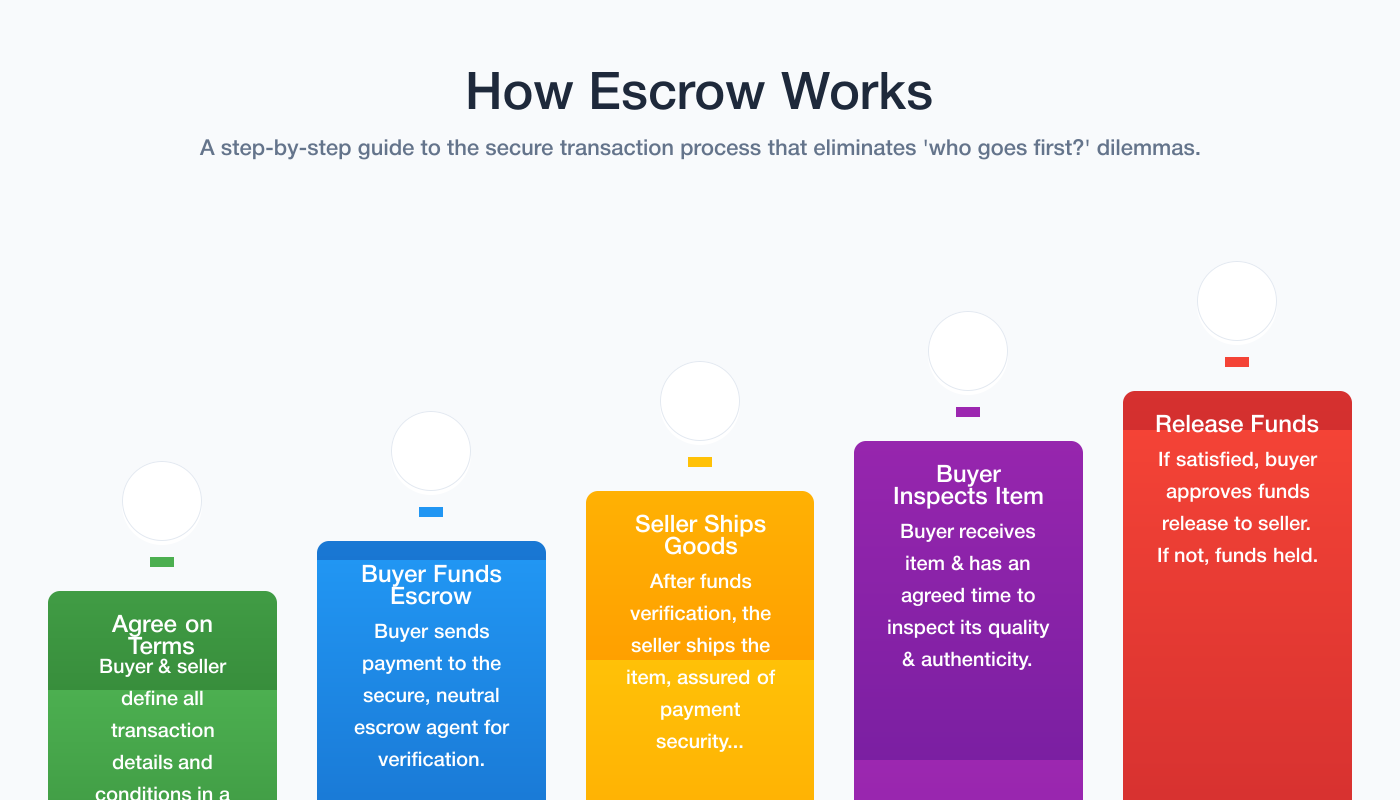
- Agree on Terms: The buyer and seller first establish and agree upon all transaction specifics: item description, price, shipping methods, delivery timelines, and any other pertinent details. This comprehensive agreement forms the foundational contract.
- Buyer Deposits Funds: The buyer securely transfers the agreed-upon funds not to the seller, but to the escrow agent. The agent verifies the funds' authenticity and holds them in a secure, impounded account, assuring the seller that payment is confirmed and ready.
- Seller Ships Goods: Once the escrow agent confirms the funds are safely held, the seller receives authorization to ship the item. This eliminates the seller's risk of non-payment, as the funds are already secured.
- Buyer Inspects Item: Upon receipt, the buyer is granted an agreed-upon inspection period to meticulously verify the item's condition, authenticity, and conformity to the agreed terms.
- Funds Released (or Disputed): If the buyer is satisfied, they instruct the escrow agent to release the funds to the seller, completing the transaction. If the item does not meet expectations, the buyer can flag a dispute, and the funds remain safely held by the escrow agent, initiating a resolution process based on the legally binding contract.
- Identity Verification (KYC/KYB): Every party involved undergoes rigorous Know Your Customer (KYC) and Know Your Business (KYB) protocols. Anonymous accounts attempting fraudulent schemes are immediately blocked. Companies like Castler.com and HudsonTS.com exemplify how thorough identity verification stops bad actors in their tracks.
- Anti-Money Laundering (AML) Monitoring: Comprehensive AML monitoring is intrinsically built into the process. Utilizing AI, systems vigilantly scrutinize all transactions in real-time, detecting unusual patterns or suspicious activity. Any anomaly is flagged swiftly, preventing illicit funds from entering or leaving the system.
- Asset Due Diligence: A critical safeguard is the meticulous verification of assets. Whether it
- Fortified Cybersecurity: Recognizing the relentless nature of cyber threats, robust cybersecurity measures are paramount. Sensitive financial data is encrypted, and accounts are protected with multi-factor authentication (MFA). These advanced defenses are essential to safeguard transactions, especially when dealing with licensed and FinCEN-registered providers like Escrowly.com, who operate far beyond the reliability of anonymous online entities.
- Mitigating Volatility: Major cryptocurrencies like Bitcoin (BTC) and Ethereum (ETH) are notoriously volatile. A million-dollar transfer today could be worth significantly more or less by the time the transaction concludes, creating unacceptable risk for both buyer and seller.
- The Stablecoin Solution: Crypto-native escrow services circumvent volatility by leveraging stablecoins such as USDT and USDC. As demonstrated by models like Escrowly.com, these assets are pegged to fiat currencies, eliminating price swings and ensuring the value of your funds remains consistent. This also combines the speed of digital assets with the stability of traditional currency.
- Unlocking Global Speed and Reach: Crypto escrow facilitates rapid, borderless movement of substantial funds, bypassing traditional banking delays and exorbitant wire transfer fees. This efficiency is crucial for global luxury trade, often enhanced by smart contracts that can automate the release process, making high-value exchanges smoother and quicker.
- Vintage Watches & Fine Jewelry: Imagine a $60,000 Patek Philippe being traded between a buyer in Dubai and a seller in Geneva (as facilitated by services like Escrowly). The buyer deposits funds into escrow, which remain held until the watch is shipped, received, and thoroughly authenticated by an expert. Only upon verification that the item matches its description are funds released, ensuring the buyer receives genuine goods and their capital is protected from counterfeits.
- Luxury & Classic Cars: Purchasing a Ferrari or any high-value vehicle sight unseen, whether interstate or internationally, is fraught with peril regarding title verification and actual condition. Escrow streamlines the process, managing all critical paperwork, verifying vehicle authenticity, titles, and funds before any final commitment. This proactive approach prevents costly mistakes by ensuring the physical asset matches the digital promise.
- Art & Rare Collectibles: Is that painting an authentic Banksy or an elaborate forgery? For high-value art and unique collectibles, professional appraisal and authentication are non-negotiable before a fortune changes hands. Escrow provides the essential timeframe and security net for buyers to conduct due diligence with experts, protecting against irreversible losses from fraudulent acquisitions.
- High-Value Digital Assets: The sale of premium domain names like uber.com, instagram.com, or twitter.com—deals often worth millions, as handled by Escrow.com—demands precise, simultaneous exchange. Escrow ensures that control of the domain and the corresponding funds swap hands at the exact same moment, eliminating reliance on trust and providing the only truly secure method for such complex digital asset transfers.
- Platform "Guarantees" are Insufficient: Many believe major platforms offer sufficient protection. In reality, their "guarantees" often come with intricate fine print, and their dispute resolution frequently favors the path of least resistance for them, not necessarily justice. Escrow, conversely, is a legally binding contract that forces both parties to adhere strictly to agreed-upon rules, leaving no room for convenient loopholes.
- Crypto's Irreversibility Demands Specialists: The power of cryptocurrency comes with the inherent risk of irreversibility. Attempting to purchase a $50,000 watch with USDT without a neutral third-party escrow is an open invitation to fraud. These unique digital transactions demand specialized, crypto-native escrow solutions.
- Fraud Prevention is Proactive: True escrow services are not passive custodians of funds. Reputable providers actively engage in identity verification, asset vetting, and strict compliance monitoring, putting in the necessary work to secure your transaction. Anything less is merely an elevated payment processor, ill-equipped for significant stakes.
Crucially, this entire framework is underpinned by a legally binding contract, explicitly outlining every obligation and condition for fund movement for both parties, thereby preventing disputes and ensuring accountability.
What you get with escrow is a clear, step-by-step framework that enforces the rules and ensures neither party is disadvantaged by making the first move.
Beyond Holding Funds: How Escrow Actively Prevents Fraud
Discard any outdated notions of escrow as merely a passive vault. Modern escrow services are far from dusty safe houses; they are active, robust fight clubs against the pervasive and often sophisticated threat of online fraud.
This isn't just a middleman; it's an advanced risk-management system and a serious security solution. Leveraging cutting-edge technology and stringent compliance, contemporary escrow actively works to prevent fraud before it ever impacts your assets.
’s a property title, a luxury watch's certificate of authenticity, or rare art, escrow services confirm legitimacy before any funds are released. This diligence prevents buyers from receiving counterfeits or worthless assets instead of their high-value purchase.
Escrow isn't a passive vault; it's a fortress, an active shield against the relentless tactics of scammers trying to appropriate your capital.
Securing Luxury Deals in the Crypto Era

Considering using cryptocurrency for a vintage Rolex or a million-dollar art piece? While bold, attempting such a transaction without a specialized crypto escrow service is an act of financial recklessness, inviting chaos and potential irreversible loss.
The inherent nature of cryptocurrency means one click can irreversibly send your payment, with no chargeback option. If the counterparty is a scammer or simply incompetent, your funds are permanently gone. The blockchain, while revolutionary, offers no recourse once a transaction is confirmed.
Crypto without specialized escrow for luxury transactions is not merely risky; it's financial Russian roulette.
From Vintage Watches to Domain Names: Escrow in Action
Dismiss the misconception that escrow is solely for real estate transactions. This indispensable mechanism safeguards high-value deals across an astonishing array of assets, where real money and significant risk demand professional, secure execution.
If the transaction involves expensive, risky assets, particularly with an unfamiliar counterparty, escrow is not just advisable—it's absolutely essential.
The Indispensable Reality: Escrow is Non-Negotiable
Let's be unequivocally clear: engaging in high-value transactions online without robust protection is navigating a financial minefield. Anyone suggesting otherwise is either dangerously naive or actively promoting a scam. Relying on blind trust with strangers online is a gamble that only pays off until it spectacularly fails, often resulting in devastating, unrecoverable losses.
So, beyond the detailed explanations, what is the ultimate, undeniable takeaway?
Ultimately, high-value transactions necessitate genuine, verifiable security—not empty promises, speculative "good vibes," or unverified forum endorsements. You require a meticulously structured, bulletproof process, because the alternative is a direct wager against sophisticated fraudsters whose sole objective is to relieve you of your money or your asset. The modest cost of escrow fees is not an expense; it is inexpensive, essential insurance.
Stop gambling with your capital: Secure your high-value transactions with a specialized escrow provider that has a proven track record, or accept the inevitable consequences of unprotected online dealings.
