

Rolex Serial Numbers and Casebacks: What They Reveal
The Stellaris Journal
A Rolex serial number can help identify or approximately date some older watches, depending on the numbering system and the source used. A reference or model number identifies the watch family or configuration. It is not the same as the serial.
Public lookup results are estimates. They do not prove authenticity, ownership, original configuration, current condition, or stolen status. Modern randomized numbers cannot be translated into a public production year. The serial, reference, documents, physical watch, service history, seller evidence, and qualified findings must make sense together.
The Short Answer: A Rolex Serial Is Evidence, Not Proof
A serial number is one part of an identification record. It may help distinguish one case or watch and, for some older numbering periods, support an approximate production range.
It cannot answer every question buyers often assign to it. A public result does not establish that:
- the complete watch is genuine;
- the dial, bezel, bracelet, movement, or other components are original;
- the seller owns the watch legally;
- the watch has not been reported lost or stolen;
- the warranty remains active;
- the condition is accurately described; or
- no number has been copied or altered.
- Does the reference agree with the represented model and material?
- Does the serial format make sense for the evidence source being used?
- Do the card and service records identify the same watch?
- Do the dial, case, movement context, bracelet, and production story agree?
- the model reference;
- dial and hand configuration;
- case material and bezel;
- bracelet and clasp;
- warranty paper or card;
- service documentation; and
- known changes during the production run.
- a transcription error;
- a masked or partially photographed number;
- wear or damage;
- a database that does not cover the watch;
- confusion between the serial and reference; or
- a false or altered identifier.
- the serial, reference, documents, or configuration conflict;
- an identifier is damaged, altered, missing, or in an unexpected location;
- a movement or internal case question is material;
- a service-case or replacement-component history is possible;
- the watch is vintage, rare, modified, or especially high value; or
- the seller resists reasonable inspection or documentation.
Preliminary research can identify a plausible or conflicting relationship. Official certification is a different process. Within the Rolex Certified Pre-Owned program, eligible watches return to Rolex workshops for checks of original configuration and components, and Rolex states that only Rolex can confirm authenticity in that certification context.
This page does not provide a hidden Rolex database or a year decoder. It explains how to use an identifier without stretching it beyond the available evidence.
Rolex Serial Number vs. Reference Number
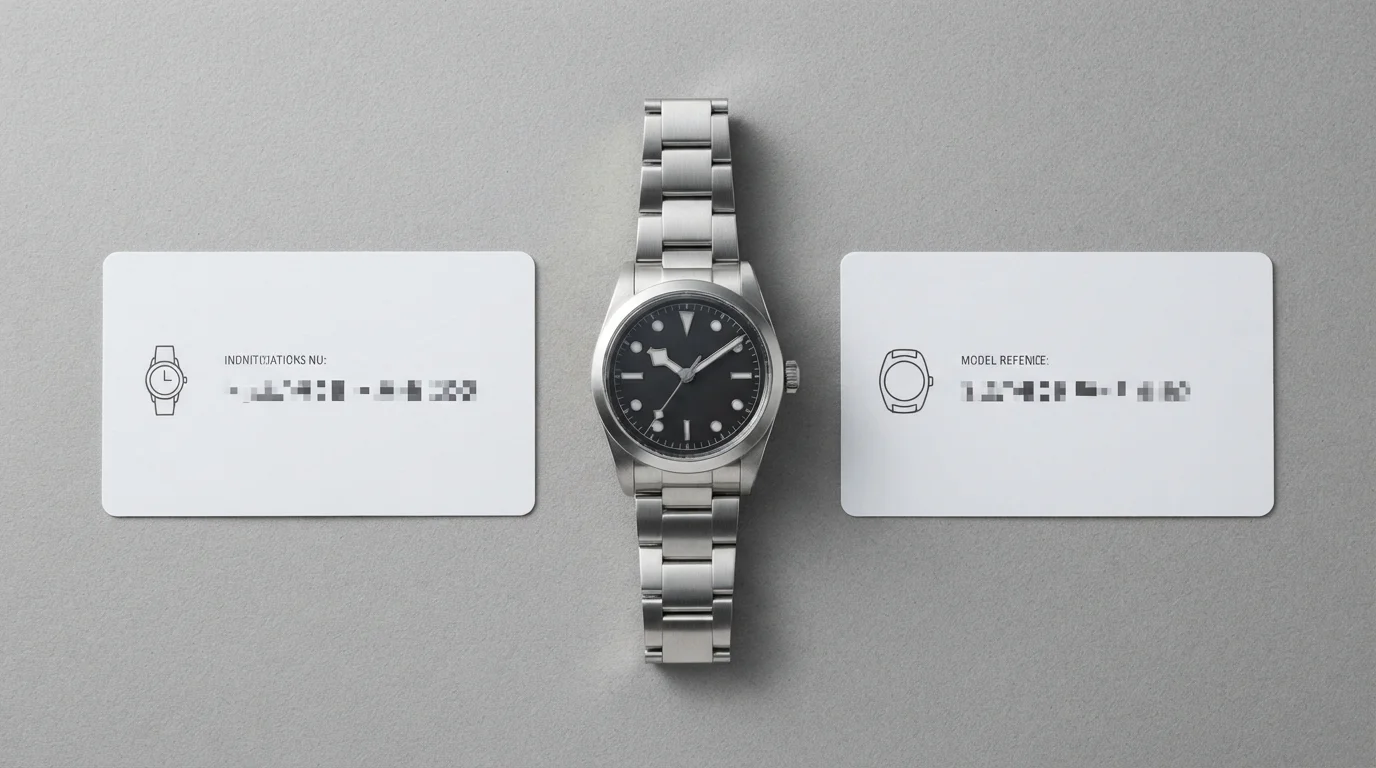
The two numbers serve different jobs.
Serial number
A serial is intended to distinguish an individual watch or case within Rolex’s system. On older watches, public specialist charts may associate sequential or prefix-era ranges with an approximate period. Modern randomized identifiers do not publicly encode a production year that can be decoded through those charts.
Reference or model number
A reference identifies a model family or configuration. It can help establish the intended case material, bezel, dial family, movement context, size, or bracelet relationship, depending on the reference and period.
Other numbers may appear elsewhere and answer different questions. A movement or calibre designation identifies movement architecture, not the individual case. Bracelet and clasp codes may support component research. Warranty cards and service documents may repeat identifiers. Do not call every number a serial or expect every identifier to appear in the same location.
The useful comparison is relational:
A matching serial and reference can support consistency. They cannot authenticate everything not tested.
Where Rolex Numbers Commonly Appear
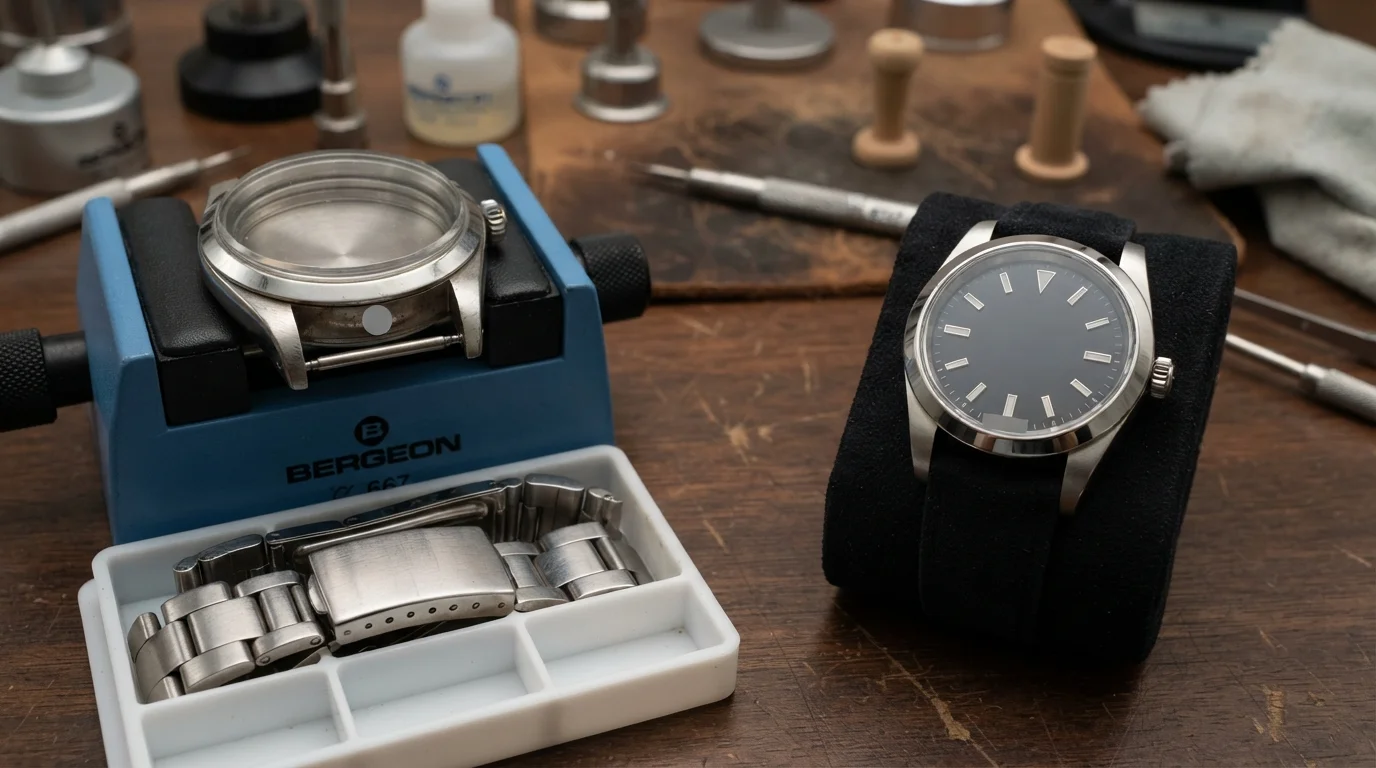
Location depends on the reference and era. Do not assume that every Rolex displays its serial or reference on the exterior caseback.
Sotheby’s Rolex consignment guidance distinguishes model and serial numbers and describes common locations on different generations. On many older watches, the bracelet-end area between the lugs can contain the serial at the 6 o’clock side and the reference at the 12 o’clock side. On many later watches, the serial appears on the inner bezel or rehaut near 6 o’clock.
These are common patterns, not a universal map. A particular reference, service history, case replacement, wear, or production variation may require more specific evidence.
The caseback still provides context even when it does not carry the serial. Its construction, fit, material, condition, engravings where expected, and signs of earlier handling should agree with the represented reference. An exterior engraving can be factory-applied, later personalized, added by a retailer, or created to imitate rarity. Its meaning has to be established rather than assumed.
Do not remove a bracelet to search for numbers unless the work is performed by someone qualified to handle the watch. Incorrect spring-bar or tool use can scratch lugs, damage the bracelet, or create a poor record while adding no certainty.
Internal identifiers and movement information are an even clearer professional boundary. Opening a case can disturb seals, introduce contamination, damage components, and affect water resistance. Establish why access is needed, who will perform it, and what report or images will be provided.
Public listing photographs should mask part of a full serial where practical. The buyer or qualified provider may need the complete identifier privately, while publishing it in high resolution can make copying easier. State that the number is masked so the image is not mistaken for damage.
Caseback condition is a separate evidence layer. Tool marks around an opening point can indicate earlier access, but they do not identify who opened the watch or whether the work was authorized. Softened engraving may reflect wear or refinishing. A remarkably clean surface may reflect preservation, replacement, or recent work. Record the observation first and name the cause only when service history or qualified examination supports it.
Use several neutral-light photographs. One image should show the complete underside and fit between the back and case. Closer views can document engravings, fastening points, impact marks, corrosion, or finish transitions. A single reflection can hide scratches or make brushed steel look polished.
What a Rolex Serial Number Lookup Can Estimate
Public lookup tables generally try to map older sequential or prefix-era numbers to approximate production periods. They can be useful for preliminary research when their source and limits are clear.
Treat the output as an estimate, not a Rolex production certificate. Rolex does not publish a public serial-year chart or public authentication lookup in the official pages reviewed for this guide. Third-party tables are built from collector, market, and historical records, and their year boundaries do not always agree.
Avoid using a universal year-by-year table as if the dates came from Rolex. A responsible result sounds like this:
> This older serial range is commonly associated by specialist references with an approximate period. The estimate should be checked against the reference, documented configuration, papers, and service history.
The serial estimate should make sense beside:
Record the lookup source, access date, exact input, and wording of the result. This matters because different tables can assign different boundaries, and a later buyer should be able to see whether the conclusion came from Rolex, an auction specialist, a collector table, or an unsupported tool. If two credible sources disagree, report a range or unresolved discrepancy rather than choosing an exact year.
If the range estimate conflicts with the reference story, do not select whichever date is more convenient. Check the transcription, source quality, possibility of a service case or replacement component, and the seller’s representation. Preserve the conflict until evidence resolves it.
The same serial-year estimate should not be used to make investment, rarity, or value claims. Approximate period is one identification input. It does not establish production quantity, market demand, or future price.
Why Modern Randomized Numbers and Plausible Results Have Limits
Modern randomized serial numbers are not publicly decodable into a production year. A third-party site may recognize the format or repeat a submitted number, but that does not create a reliable year result.
Plausibility is also not authentication. A counterfeit can carry a copied number from a genuine watch. The same number can appear on multiple false cases or documents. A valid-looking format does not establish that the case, movement, card, and represented history belong together.
An unrecognized number is not a complete verdict either. Possible explanations include:
Those possibilities are not equally likely in every case. The point is to investigate rather than invent the answer.
A serial lookup also does not supply a stolen-watch or title check. Ownership and loss reporting require their own evidence and appropriate services. Nor does a recognized number establish active warranty, current service condition, or original configuration.
For a modern watch, documents and official service history may provide stronger date context than a public serial chart. Even then, each record should be matched to the physical watch and described within its scope.
Retain the source, lookup date, and exact number transcription privately so another reviewer can reproduce the comparison.
Match the Number to the Watch, Papers, and Caseback Context
The strongest use of a serial is to test consistency across independent evidence.
Compare:
1. the exact reference and represented production context;
2. the serial and its legitimate location;
3. the warranty paper or card;
4. service invoices or cards;
5. the case, dial, bezel, bracelet, clasp, and movement context;
6. seller disclosures about replacement or modified components; and
7. actual-watch photographs and delivered condition.
Keep authenticity, originality, condition, and completeness separate. A genuine Rolex service case or other replacement component may carry legitimate identifiers while changing the watch’s originality story. A heavily worn or refinished case can still be genuine. A complete set of accessories can be mismatched.
Consider a hypothetical example. An older watch has a serial range commonly associated with one period, but the represented reference, warranty paper, and dial configuration point elsewhere. That is not enough to name the cause. The number may have been transcribed incorrectly, a component may have been replaced, the documents may be mismatched, or the listing may be wrong. The safe action is to pause and obtain qualified review.
Caseback condition can add questions without deciding cause. Tool marks may reflect authorized, independent, or careless service. A clean surface may reflect preservation, replacement, or refinishing. Describe the visible observation first and attribute the explanation only when records support it.
The Stellaris FAQ says listings use actual-watch photographs, specify included items, provide condition information, and include an authenticity guarantee. Stellaris is an independent dealer. Its guarantee is not a public Rolex lookup or official Rolex certification.
The customer-visible description should state which number was reviewed, whether it is fully visible or masked, where it appears, which source was used, what period the source suggests, and which watch and document details agree. It should also state any conflict without selecting an unsupported explanation.
When reviewing the current Stellaris Rolex collection, ask which identifier is shown or masked, how the reference was established, which documents accompany the watch, and what remains outside the listing’s evidence.
When to Stop Looking Up and Seek Qualified Confirmation
Stop relying on public lookup results when:
Rolex states in its watch-care FAQ that Official Rolex Jewelers and Service Centers have the training, equipment, and expertise to guarantee the authenticity of each part. The Rolex Certified Pre-Owned process has a separate official scope for eligible watches sold through participating Official Rolex Retailers.
Do not treat an independent assessment, dealer guarantee, service invoice, and Rolex CPO certification as interchangeable. Ask who examined the watch, what was accessed, what standards were applied, which documents were reviewed, and which questions remained outside scope.
Can I verify a Rolex online by serial number?
No public serial result verifies the complete watch. It can support approximate dating or consistency research for some older watches, subject to source limitations.
Can a serial number tell the exact year?
Not reliably in every case. Older public ranges provide estimates and can disagree. Modern randomized numbers do not publicly encode a production year.
Is the serial number on the caseback?
Do not assume so. Common locations vary by reference and era, including between the lugs on many older watches and the inner bezel on many later ones. The caseback may provide other construction or condition evidence.
Does a matching card prove authenticity?
No. It supports a connection only when the document is genuine and belongs to the physical watch. It does not establish every component’s identity, originality, or current condition.
What if the serial is not recognized?
Recheck the transcription, identifier type, masking, damage, and coverage of the source. Then seek qualified confirmation if the issue remains material. Do not decide counterfeit status from one unsupported database result.
